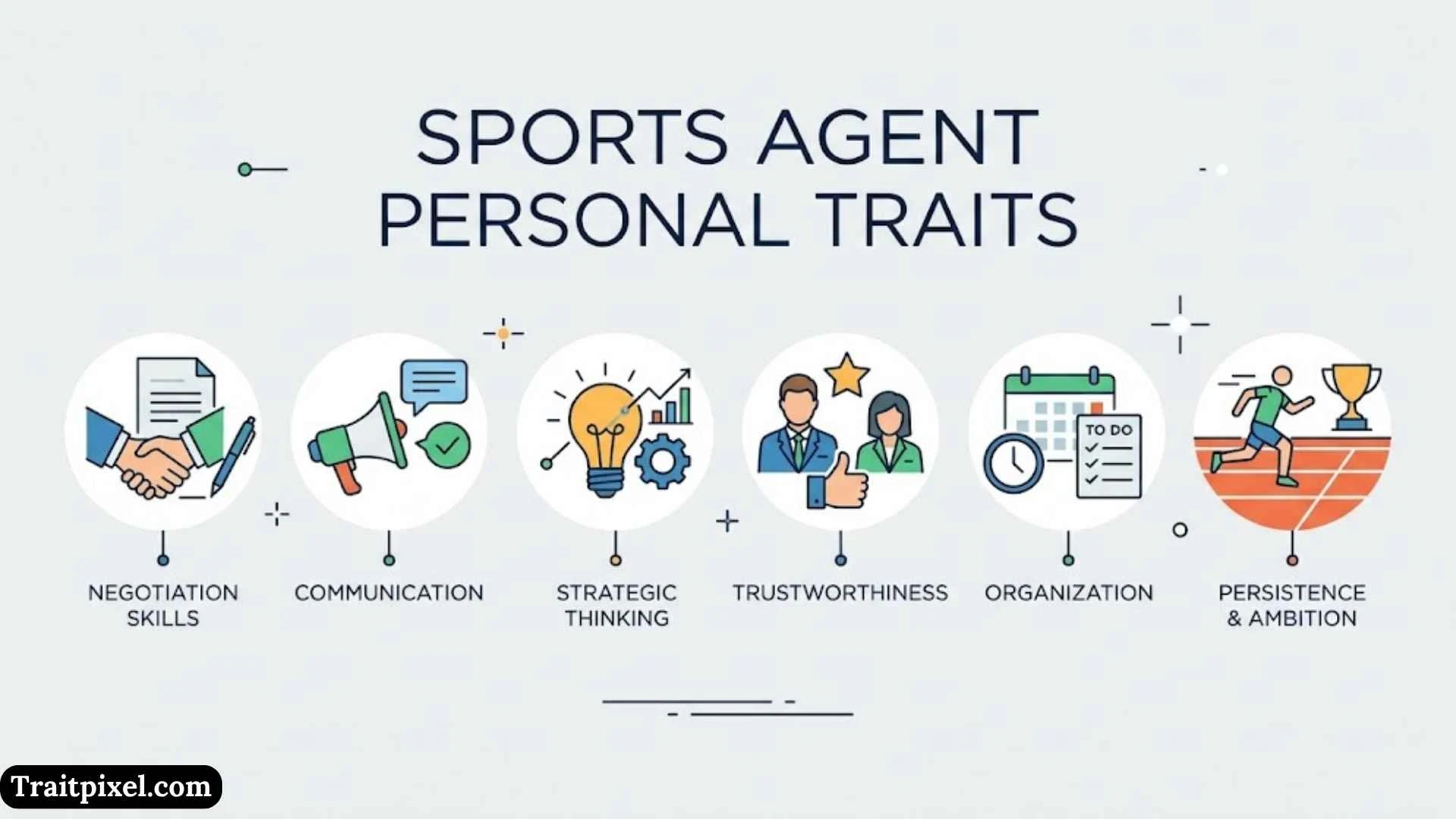
A successful sports agent needs more than a passion for sports. The most important sports agent personal traits include strong communication, negotiation skills, integrity, emotional intelligence, patience, business judgment, and relationship-building ability. These qualities help agents represent athletes, negotiate contracts, protect their clients’ interests, and manage the demands of professional sports.
Sports agents work with athletes, coaches, team executives, sponsors, lawyers, and marketing professionals. They often handle high-pressure decisions that affect a client’s income, career opportunities, public image, and long-term financial security. The best agents combine business knowledge with personal qualities that earn trust and support sound decisions.
This guide explores the essential characteristics of effective sports agents, explains how each trait works in practice, and shows aspiring agents how to develop these skills.
Quick Answer: What Personal Traits Should a Sports Agent Have?
A sports agent should be trustworthy, persuasive, disciplined, patient, organized, adaptable, emotionally intelligent, and confident. Strong negotiation, communication, networking, analytical thinking, and problem-solving skills are also essential.
The most effective agents balance ambition with integrity. They pursue favorable opportunities for their clients without making unrealistic promises, overlooking important details, or sacrificing long-term relationships for short-term gains.
Sports Agent Traits at a Glance
| Personal trait | Why it matters | Example in practice |
| Integrity | Protects client interests and builds trust | Explaining contract risks honestly |
| Communication | Keeps athletes, teams, and sponsors aligned | Clearly explaining an offer’s terms |
| Negotiation | Helps secure favorable agreements | Discussing salary, bonuses, and incentives |
| Emotional intelligence | Helps manage pressure and relationships | Supporting an athlete after a disappointing season |
| Patience | Supports long-term career planning | Waiting for a suitable opportunity rather than accepting a poor offer |
| Confidence | Helps agents advocate effectively | Presenting a client’s value to a team |
| Persistence | Keeps opportunities moving forward | Following up with teams and sponsors |
| Organization | Prevents missed deadlines and overlooked details | Tracking contract options and renewal dates |
| Business acumen | Supports sound career and financial decisions | Comparing endorsement offers |
| Networking | Creates access to opportunities | Building professional relationships with scouts and executives |
| Adaptability | Helps agents respond to changing circumstances | Revising a career strategy after an injury |
| Discretion | Protects confidential information | Keeping private contract discussions confidential |
| Analytical thinking | Improves decision-making | Comparing contract structures and career risks |
| Leadership | Provides direction during difficult decisions | Coordinating legal, financial, and marketing advisers |
| Resilience | Helps agents recover from setbacks | Rebuilding a client’s opportunities after a team release |
15 Essential Personal Traits of a Successful Sports Agent

The strongest sports agents combine interpersonal qualities with business discipline. Each trait serves a different purpose, from earning an athlete’s trust to evaluating complex contract offers.
1. Integrity and Honesty
Integrity is one of the most important personal traits for a sports agent because athletes often depend on their representatives when making major career decisions. An agent may have access to private financial information, contract negotiations, sponsorship offers, and personal concerns.
Honest agents explain opportunities clearly, disclose conflicts of interest, and avoid promises they cannot keep. They also admit when they lack the expertise to answer a question and seek qualified help.
What integrity looks like in practice:
- Explaining the risks and benefits of a proposed contract.
- Disclosing fees, commissions, and potential conflicts of interest.
- Refusing to misrepresent an athlete’s performance or market value.
- Protecting confidential client information.
- Recommending independent legal or financial advice when appropriate.
For example, an athlete might receive an attractive endorsement offer from a company with a questionable reputation. An agent focused only on immediate earnings might encourage the athlete to sign. An ethical agent investigates the arrangement, explains potential reputational risks, and helps the client make an informed decision.
Integrity matters because a signed contract is only one part of a professional relationship. Trust must continue throughout the athlete’s career.
2. Excellent Communication Skills
Sports agents must communicate effectively with people who have different priorities, backgrounds, and levels of industry knowledge. They may explain a contract to an athlete, discuss compensation with a team executive, and pitch a sponsorship opportunity to a marketing director on the same day.
Good communication means more than speaking persuasively. It includes listening carefully, asking relevant questions, writing clearly, and adjusting the message to the audience.
Effective sports agents know how to:
- Explain complex contract language in plain English.
- Ask athletes about their long-term goals before proposing a strategy.
- Write professional emails and negotiation proposals.
- Keep clients informed about important developments.
- Handle disagreements without becoming hostile.
- Confirm key decisions in writing.
Practical example: A team offers a player a two-year contract with performance incentives. Rather than focusing only on the headline salary, the agent explains the guaranteed money, incentive conditions, contract length, and possible consequences of accepting the offer.
Clear communication helps athletes understand their choices instead of simply relying on an agent’s recommendation.
3. Negotiation Skills
Negotiation is a core professional skill for sports agents. Agents may negotiate salaries, signing bonuses, contract length, performance incentives, endorsement payments, appearance fees, and other business terms.
Strong negotiators understand both their client’s priorities and the other party’s constraints. They prepare carefully, identify acceptable outcomes, and look for terms that create value without damaging useful relationships.
Successful negotiation involves several abilities:
- Preparation: Researching comparable contracts, market conditions, and the client’s value.
- Strategic thinking: Knowing which terms matter most and where flexibility exists.
- Persuasion: Presenting clear reasons to support a proposed agreement.
- Emotional control: Remaining composed when discussions become tense.
- Problem-solving: Finding alternatives when the parties disagree.
- Timing: Recognizing when to negotiate, wait, or consider another opportunity.
Imagine a basketball player receives two offers. One provides a higher annual salary, while the other offers a longer contract and a more promising role. A skilled agent compares the complete arrangements against the athlete’s priorities instead of automatically choosing the larger number.
The goal is not to win every discussion. It is to secure an agreement that serves the client’s interests and remains workable for everyone involved.
4. Emotional Intelligence
Emotional intelligence is the ability to recognize emotions, understand how they influence behavior, and respond appropriately. This trait helps sports agents build relationships and guide athletes through stressful situations.
Athletes may face injuries, performance slumps, public criticism, selection disputes, contract uncertainty, and family pressure. An agent who understands these emotional demands can offer better support without allowing feelings to replace sound judgment.
Emotional intelligence includes four useful abilities:
- Self-awareness: Recognizing personal emotions and biases.
- Self-regulation: Staying composed during difficult conversations.
- Empathy: Understanding another person’s perspective.
- Relationship management: Handling conflict and maintaining productive relationships.
For instance, an athlete might react angrily after a team offers less money than expected. An emotionally intelligent agent listens to the athlete’s concerns, clarifies what caused the frustration, and then develops a response based on the available facts.
This approach prevents a temporary emotional reaction from damaging a potentially valuable professional relationship.
5. Patience and Long-Term Thinking
Sports careers rarely follow a perfectly predictable path. An athlete may need time to recover from an injury, improve performance, find a suitable team, or establish a marketable public profile.
Patient agents understand that the first available opportunity is not always the best one. They weigh immediate rewards against long-term career development.
Patience helps agents:
- Avoid rushing athletes into unsuitable agreements.
- Build relationships before asking for business.
- Wait for useful information before recommending a decision.
- Support clients through slow negotiations.
- Plan beyond the next contract or season.
Consider a young athlete who receives limited playing time with a professional team. An agent could push for an immediate move based on frustration alone. A patient agent first evaluates the athlete’s development, contractual position, potential opportunities, and realistic prospects elsewhere.
Patience does not mean passivity. Effective agents continue gathering information, building alternatives, and preparing for the next decision.
6. Confidence and Assertiveness
Confidence helps sports agents advocate for their clients, communicate their value, and remain composed when negotiating with experienced professionals.
However, confidence should come from preparation and knowledge rather than arrogance. An agent who makes unsupported claims or dismisses other people’s concerns can undermine credibility.
Healthy assertiveness means expressing a position clearly while respecting other parties. It also involves challenging an unfavorable proposal without turning every disagreement into a personal conflict.
A confident sports agent will:
- Present evidence supporting the client’s market value.
- Ask direct questions about unclear contract terms.
- Explain why a proposed condition may be unacceptable.
- Defend the client’s interests professionally.
- Acknowledge uncertainty instead of pretending to know everything.
For example, a sponsor might offer an athlete a low fee for a campaign that requires extensive promotional work. The agent can explain the athlete’s audience, the requested deliverables, and the commercial value of the partnership before proposing revised terms.
Confidence works best when preparation gives it a solid foundation.
7. Persistence and Resilience
Persistence helps sports agents continue working toward their clients’ goals despite rejection, delays, and unexpected setbacks. Resilience helps them recover, learn, and adjust after disappointment.
An agent may contact multiple teams before finding a suitable opportunity. A sponsorship proposal might receive no response, or a promising negotiation could collapse at the final stage.
Effective agents don’t interpret every rejection as proof that their strategy has failed. They examine what happened and decide whether to follow up, revise their approach, or pursue a different option.
Persistence involves:
- Maintaining professional follow-up habits.
- Preparing alternative plans.
- Learning from unsuccessful negotiations.
- Keeping clients informed when circumstances change.
- Staying productive during quiet periods.
- Recognizing when further effort is unlikely to produce value.
There is an important distinction between persistence and stubbornness. Repeating the same ineffective strategy is not resilience. A strong agent adapts while remaining committed to the client’s broader goals.
8. Organization and Time Management
Sports agents often manage multiple clients, negotiations, meetings, travel arrangements, marketing opportunities, and deadlines. Strong organizational skills prevent important details from disappearing amid competing demands.
A missed deadline or overlooked contract clause can create avoidable problems. Reliable agents use structured systems to track obligations rather than depending entirely on memory.
Useful organizational habits include:
- Maintaining a calendar of contract dates and deadlines.
- Tracking negotiation stages and follow-up commitments.
- Keeping client documents secure and easy to retrieve.
- Recording important decisions and action items.
- Prioritizing urgent tasks without neglecting long-term work.
- Scheduling regular client updates.
For example, an agent representing several athletes might maintain a separate file for each client’s contract terms, renewal options, endorsement commitments, and upcoming meetings.
Organization also improves client confidence. Athletes are more likely to trust an agent who can explain the current status of a negotiation and identify the next steps without confusion.
9. Business Acumen and Financial Awareness
Business acumen helps sports agents understand how athletic performance, market demand, commercial partnerships, and contract terms affect an athlete’s career.
An agent should understand the financial structure of the opportunities they pursue. This includes guaranteed compensation, conditional bonuses, sponsorship obligations, commission arrangements, and the potential costs of certain decisions.
Financial awareness helps agents ask better questions, but it does not make them qualified to provide every type of financial, tax, or legal advice.
Important business abilities include:
- Evaluating the commercial value of an athlete’s profile.
- Understanding the financial terms of proposed contracts.
- Comparing sponsorship opportunities and obligations.
- Recognizing the difference between guaranteed and conditional earnings.
- Understanding agency fees and payment schedules.
- Coordinating with qualified lawyers, accountants, and financial advisers.
Suppose a company offers an athlete a substantial endorsement payment in exchange for exclusivity. The agent should examine which competing brands the athlete must avoid, how long the restriction lasts, and whether the payment justifies the lost opportunities.
A good business decision considers the full arrangement, not simply the amount displayed in the offer.
10. Networking and Relationship Building
Networking helps sports agents discover opportunities, exchange industry information, and develop professional relationships. Sports representation depends on communication among athletes, teams, coaches, scouts, sponsors, lawyers, and other industry professionals.
However, effective networking is not simply collecting phone numbers or attending events. It means becoming a reliable person with whom others can do business.
Strong relationship-building habits include:
- Following up after professional meetings.
- Remembering important details about business contacts.
- Sharing relevant information when appropriate.
- Respecting professional boundaries.
- Maintaining relationships even when no immediate deal is available.
- Delivering on commitments consistently.
For example, an agent who maintains respectful relationships with team personnel may learn about a potential roster opening sooner than someone who contacts executives only when seeking a contract.
Relationships can create access to opportunities, but they do not guarantee favorable outcomes. Credibility, preparation, and the athlete’s actual fit remain important.
11. Adaptability and Flexibility
Sports careers can change quickly. Injuries, coaching decisions, roster changes, market shifts, and new business opportunities may require an agent to rethink an existing plan.
Adaptability helps agents respond to changing conditions without losing sight of the athlete’s priorities.
An adaptable agent can:
- Adjust a career strategy when circumstances change.
- Learn new contract practices and industry developments.
- Work with different personalities and professional cultures.
- Evaluate alternative leagues, teams, or markets.
- Change communication methods to suit a client’s needs.
- Recognize when an established approach no longer works.
Imagine a football player is released unexpectedly before a new season. The agent may need to contact other teams, review contractual obligations, assess realistic opportunities, and help the athlete prepare for new evaluations.
Flexibility is most effective when combined with sound judgment. Changing direction quickly is useful only when the new direction makes sense.
12. Discretion and Confidentiality
Sports agents often handle sensitive information about contracts, finances, health-related circumstances, family concerns, and business negotiations. Discretion protects the athlete’s privacy and preserves professional trust.
A discreet agent knows that not every piece of information belongs in a conversation, social media post, or public interview.
This trait includes:
- Sharing client information only when authorized or otherwise legally permitted.
- Using secure methods to store and transmit sensitive documents.
- Avoiding gossip about other athletes or negotiations.
- Confirming permission before publicizing a client’s business.
- Handling private disagreements professionally.
- Understanding applicable confidentiality obligations.
For example, an agent may learn that a player is considering a transfer while negotiations remain confidential. Publicly discussing the possibility without authorization could create unwanted media attention or affect the player’s relationship with a team.
Discretion is not the same as hiding wrongdoing. Agents must still meet legal, regulatory, and professional reporting obligations where applicable.
13. Analytical Thinking and Sound Judgment

Analytical thinking helps sports agents evaluate evidence, compare alternatives, and make decisions based on more than instinct.
An athlete’s market value cannot always be understood through one performance statistic or a single recent result. The agent may need to consider playing time, position, age, contract conditions, team needs, market demand, and career goals.
Sound judgment combines analysis with practical experience and an understanding of uncertainty.
Useful analytical habits include:
- Comparing relevant contracts and market information.
- Separating verified facts from assumptions.
- Evaluating risks and potential benefits.
- Considering multiple scenarios.
- Asking what evidence would change a recommendation.
- Reviewing the outcome of past decisions.
For instance, an agent comparing two professional opportunities might evaluate compensation, expected playing time, location, coaching fit, contract security, and future career prospects.
A structured comparison helps reveal trade-offs that a single headline figure can hide. It also gives the athlete a clearer basis for making the final decision.
14. Leadership and Accountability
Sports agents often coordinate people with different responsibilities and priorities. Leadership helps them provide direction, keep projects moving, and ensure that important decisions receive proper attention.
Good leadership does not mean controlling every aspect of an athlete’s life. It means helping the athlete understand available options, organizing appropriate support, and respecting the client’s authority over personal decisions.
Strong agent leadership involves:
- Setting clear expectations.
- Coordinating qualified professionals.
- Delegating tasks when appropriate.
- Taking responsibility for mistakes.
- Communicating changes promptly.
- Encouraging informed, independent decisions.
Suppose an athlete is preparing for a major contract negotiation. The agent may coordinate with a sports lawyer, review relevant market information, arrange meetings, and help the client compare possible outcomes.
Accountability matters just as much. If an agent overlooks a commitment, the appropriate response is to acknowledge the mistake, explain its impact, and take practical steps to address it.
15. Passion for Sports and Continuous Learning
A genuine interest in sports can motivate an agent to understand athletes’ working lives, follow industry developments, and remain engaged during demanding periods. Yet passion alone is not enough to represent clients effectively.
Successful agents also commit to learning about contracts, business practices, professional conduct, and the rules governing their chosen sport.
Continuous learning may involve:
- Studying relevant league rules and collective bargaining agreements.
- Following changes in athlete representation requirements.
- Learning about sponsorship and marketing practices.
- Improving negotiation and communication skills.
- Building knowledge of contract structures.
- Seeking guidance from experienced professionals.
A person may love basketball but still need substantial training to understand player contracts and representation rules. Similarly, a business graduate may have strong commercial knowledge but need time to understand the culture and demands of a particular sport.
Passion provides motivation. Professional competence turns that motivation into useful service for athletes.
Positive and Negative Traits of a Sports Agent
Sports agents need strong personal qualities, but some traits can become harmful when taken too far. Confidence can turn into arrogance, ambition can become greed, and persistence can become an unwillingness to change direction.
| Positive trait | Unhelpful extreme | Better professional approach |
| Confidence | Arrogance | Advocate firmly while respecting others |
| Ambition | Greed | Pursue growth without sacrificing client interests |
| Persistence | Stubbornness | Continue when useful and adapt when necessary |
| Loyalty | Blind agreement | Support the client while offering honest advice |
| Competitiveness | Hostility | Prepare thoroughly without creating unnecessary conflict |
| Optimism | Unrealistic promises | Encourage clients while explaining genuine risks |
| Independence | Refusal to seek help | Make decisions confidently and consult specialists |
| Patience | Indecision | Allow time for sound decisions while meeting deadlines |
| Persuasiveness | Manipulation | Present accurate information and respect informed choice |
| Discretion | Excessive secrecy | Protect privacy while meeting legal obligations |
The goal is not to eliminate ambition, competitiveness, or confidence. It is to use these qualities responsibly.
A useful principle is to judge each trait by its effect on the athlete’s interests, the quality of decisions, and the trust between the agent and client.
Essential Skills vs. Personal Traits in Sports Representation
Personal traits and professional skills work together, but they are not identical. A trait describes a person’s usual tendencies, while a skill describes something they can learn and improve through practice.
For example, an agent may naturally be patient but still need to develop contract negotiation skills. Another agent may be naturally outgoing but require practice to communicate clearly under pressure.
| Personal trait | Related professional skill | How they work together |
| Confidence | Public speaking and negotiation | Confidence helps an agent present a case effectively |
| Patience | Contract management | Patience supports careful review and timely decisions |
| Integrity | Ethical decision-making | Integrity guides the agent when commercial incentives conflict with client interests |
| Empathy | Client relationship management | Empathy helps the agent understand an athlete’s concerns |
| Persistence | Business development | Persistence supports consistent outreach and follow-up |
| Organization | Project management | Organization helps track multiple clients and deadlines |
| Analytical thinking | Contract evaluation | Analysis helps compare offers and identify risks |
| Adaptability | Strategic planning | Adaptability helps revise plans when circumstances change |
The distinction matters for aspiring agents. You don’t need to possess every quality naturally before entering the industry. You can strengthen many professional behaviors through education, mentorship, deliberate practice, and experience.
How Personal Traits Influence a Sports Agent’s Daily Work
The importance of a particular trait depends on the situation. Negotiations require preparation and assertiveness, while sensitive client conversations may demand empathy and discretion.
Here are ten realistic scenarios showing how these qualities translate into professional decisions.
Real-World Examples of Sports Agent Traits
1. Negotiating a professional contract
A team offers an athlete a contract with a lower guaranteed salary than expected. The agent uses market research, confidence, and negotiation skills to request better terms while keeping communication professional.
2. Supporting an athlete after an injury
An athlete worries that an injury will affect future opportunities. The agent listens, respects the athlete’s concerns, and coordinates appropriate professional support rather than making promises about recovery or future contracts.
3. Evaluating a sponsorship deal
A sportswear company offers attractive compensation but requests extensive exclusivity. The agent uses analytical thinking to examine the restrictions, obligations, payment structure, and potential effect on other commercial opportunities.
4. Managing a difficult client conversation
An athlete becomes frustrated after receiving limited playing time. The agent listens carefully, reviews the available information, and discusses realistic next steps without dismissing the athlete’s feelings.
5. Handling a failed negotiation
A team withdraws an offer at the last minute. The agent remains resilient, updates the client, assesses alternative opportunities, and considers whether further discussions make sense.
6. Protecting confidential information
A journalist asks whether a player plans to leave their current team. The agent respects the client’s privacy and avoids confirming unapproved details.
7. Managing several clients
Multiple athletes have upcoming contract deadlines. The agent uses calendars, document management, and clear priorities to avoid overlooking important obligations.
8. Building industry relationships
An agent meets a team executive at a professional event. Instead of immediately demanding a meeting about a client, the agent develops a relevant professional connection and follows up appropriately.
9. Advising a young athlete
A promising college athlete is considering a professional career. The agent explains potential opportunities and risks while ensuring that the athlete understands the applicable representation rules and eligibility implications.
10. Learning from a mistake
An agent sends an incomplete proposal that delays a discussion. Rather than blaming a colleague, the agent acknowledges the error, corrects the document, and improves the review process.
These examples illustrate a key lesson: a trait becomes valuable when it leads to a responsible action. Describing yourself as organized, ethical, or persistent matters less than demonstrating those qualities consistently.
How to Develop the Personal Traits of a Sports Agent
Most aspiring sports agents can strengthen their professional habits through focused practice. The best starting point is to identify which behaviors need improvement and connect each one to a practical activity.
A practical development plan
| Development goal | Practical exercise | Sign of progress |
| Improve communication | Practice explaining a contract clause in plain English | Others understand the explanation without repeated clarification |
| Build negotiation confidence | Role-play salary and sponsorship discussions | You can defend a position using clear evidence |
| Strengthen analytical thinking | Compare hypothetical contract offers | You identify trade-offs and explain your reasoning |
| Improve organization | Maintain a deadline tracker and weekly task list | Fewer missed commitments and clearer priorities |
| Develop emotional intelligence | Practice active listening during difficult conversations | You understand concerns before proposing solutions |
| Build networking skills | Attend relevant professional events and follow up thoughtfully | You develop meaningful, mutually respectful relationships |
| Strengthen integrity | Review hypothetical conflicts of interest | You can identify risks and explain an ethical response |
| Increase resilience | Review unsuccessful projects and record lessons | You adapt your approach instead of repeating ineffective methods |
A Sports Agent’s Ethical Decision-Making Framework

Personal qualities matter most when decisions become difficult. An agent may face pressure to close a deal, maintain a relationship, or pursue a lucrative opportunity even when the arrangement raises concerns.
A simple decision framework can help keep the athlete’s interests at the center.
Step 1: Clarify the client’s goals
Identify what the athlete values most, such as career development, financial security, playing opportunities, or commercial growth.
Step 2: Verify the facts
Review the available terms, deadlines, obligations, relevant rules, and information needed to assess the opportunity.
Step 3: Identify conflicts and risks
Ask whether personal incentives, undisclosed fees, confidentiality concerns, or unrealistic promises could affect the decision.
Step 4: Compare realistic alternatives
Evaluate the proposed agreement alongside other available options, including the consequences of waiting or declining.
Step 5: Explain the recommendation
Present the advantages, disadvantages, and uncertainties in language the client can understand. Encourage independent professional advice when appropriate.
Step 6: Document and follow through
Record decisions and commitments appropriately, meet relevant obligations, and review the outcome.
This framework is a practical guide, not a substitute for applicable laws, league rules, professional regulations, or legal advice. Its main purpose is to encourage consistent, transparent decision-making.
Common Misconceptions About Sports Agent Personal Traits
Several common assumptions oversimplify what makes an agent effective. Understanding these misconceptions helps aspiring professionals develop a more balanced approach.
Myth: A sports agent must be naturally persuasive
Fact: Persuasion can improve with practice. Preparation, active listening, relevant evidence, and a clear understanding of the other party’s concerns often matter more than having an outgoing personality.
Myth: Aggressive negotiators always get better contracts
Fact: Aggression can sometimes damage relationships or reduce the chance of reaching an agreement. Effective negotiation requires preparation, timing, flexibility, and a clear understanding of the client’s priorities.
Myth: Loving sports is enough to succeed
Fact: Passion can provide motivation, but representation also requires business knowledge, professional conduct, organization, communication, and an understanding of relevant regulations.
Myth: A successful agent must know everything
Fact: Sports representation often involves legal, tax, investment, medical, and marketing issues. Responsible agents recognize their limits and work with qualified specialists.
Myth: Networking is simply knowing influential people
Fact: Professional relationships become useful when people trust each other’s judgment and reliability. A large contact list cannot replace competence or consistent follow-through.
Myth: Confidence means never admitting uncertainty
Fact: Credible professionals distinguish what they know from what they need to verify. Asking an expert for guidance can prevent costly errors.
Myth: A good agent always agrees with the athlete
Fact: Representation involves honest advice, not automatic agreement. An agent should explain concerns respectfully and help the client evaluate the consequences of different choices.
Myth: Personal traits alone guarantee success
Fact: Strong character traits support effective representation, but they do not guarantee contracts, sponsorships, or career success. Industry knowledge, qualifications, professional networks, timing, and market conditions also matter.
Related Traits That Help Sports Agents Succeed
Several related personal qualities reinforce the core traits discussed above. They can be especially valuable as an agent takes on more clients or handles more complex negotiations.
- Attention to detail: Helps identify inconsistencies, missing terms, and overlooked obligations.
- Curiosity: Encourages agents to ask better questions and investigate unfamiliar opportunities.
- Humility: Makes it easier to accept feedback and recognize knowledge gaps.
- Cultural awareness: Helps agents work respectfully with people from different backgrounds and markets.
- Decisiveness: Supports timely choices when the available information is sufficient.
- Empathy: Helps agents understand the personal pressures athletes face.
- Professionalism: Encourages punctuality, respectful communication, and dependable follow-through.
- Accountability: Ensures agents take responsibility for their decisions and commitments.
- Strategic thinking: Connects immediate opportunities to long-term career goals.
- Discipline: Helps maintain consistent standards even during busy periods.
These qualities are interconnected. Attention to detail supports organization, humility encourages continuous learning, and accountability reinforces integrity. Together, they create a more dependable approach to athlete representation.
Frequently Asked Questions About Sports Agent Personal Traits
What are the most important personal traits of a sports agent?
The most important traits include integrity, communication, negotiation ability, emotional intelligence, patience, organization, confidence, and analytical thinking. Integrity and communication are especially important because agents handle sensitive decisions and represent athletes in high-stakes professional relationships.
What personality type makes a good sports agent?
There is no single personality type that guarantees success. Outgoing people may find networking easier, while quieter individuals may excel at listening, research, and careful analysis. Different personalities can succeed when they develop the skills and professional habits required for athlete representation.
Why is integrity important for sports agents?
Integrity helps agents protect client interests, disclose relevant conflicts, communicate honestly, and maintain confidentiality. Athletes often rely on their representatives to explain complicated decisions. Dishonesty or undisclosed personal incentives can undermine that trust and create professional or legal consequences.
Are negotiation skills more important than communication skills?
The two skills complement each other. Negotiation helps agents pursue favorable contract terms, while communication ensures that clients and other parties understand the issues. Strong negotiation depends heavily on listening, explaining proposals clearly, and managing disagreements professionally.
Can someone become a sports agent without being naturally persuasive?
Yes. Persuasion is a skill that can improve through practice, preparation, and feedback. Learning to present evidence, ask thoughtful questions, understand opposing viewpoints, and explain proposals clearly can help aspiring agents become more effective communicators and negotiators.
How does emotional intelligence help a sports agent?
Emotional intelligence helps agents recognize their own reactions, understand clients’ concerns, and manage difficult conversations. It can be particularly valuable when athletes face injuries, disappointing offers, public criticism, or uncertainty about their careers.
What are the negative traits of a sports agent?
Potentially harmful traits include dishonesty, arrogance, impatience, poor organization, excessive aggression, greed, and unwillingness to accept feedback. These behaviors can damage client relationships, weaken negotiations, and lead to poor decisions.
What qualifications and skills does a sports agent need?
Requirements vary by sport, league, jurisdiction, and type of representation. Agents may need specific certifications, registrations, education, examinations, or professional experience. For example, the NFL Players Association has a formal certification process for contract advisers, while FIFA licenses football agents under its applicable rules. Professional skills such as negotiation, contract knowledge, communication, and business judgment are also important.
How can students develop the traits needed to become sports agents?
Students can study sports management, business, marketing, law, or related subjects while developing communication, negotiation, and analytical skills. Internships, supervised practical experience, mentorship, and participation in relevant professional activities can help build industry knowledge. They should also research the specific requirements for representing athletes in their chosen sport.
What is the difference between a sports agent and a sports manager?
A sports agent typically focuses on representation, contract negotiations, career opportunities, and commercial deals. A sports manager may focus on broader operational or administrative responsibilities, depending on the role. The titles sometimes overlap, so the actual duties and contractual responsibilities matter more than the job title alone.
Do sports agents need legal and financial knowledge?
Yes, they benefit from understanding contract structures, compensation, commissions, and relevant regulations. However, familiarity with these subjects does not automatically qualify an agent to provide legal, tax, investment, or other specialized advice. Agents should involve qualified professionals when a matter falls outside their expertise.
Key Takeaways
- Integrity establishes the trust needed for effective athlete representation.
- Communication and negotiation help agents explain options and pursue favorable agreements.
- Emotional intelligence supports athletes through pressure, uncertainty, and setbacks.
- Organization and analytical thinking reduce avoidable mistakes and improve decisions.
- Networking and relationship building can create access to professional opportunities.
- Adaptability and resilience help agents respond to changing circumstances.
- Business knowledge and continuous learning support long-term professional competence.
- Accountability and discretion protect client relationships and professional credibility.
- Personal traits can be developed through deliberate practice, mentorship, education, and feedback.
- No single trait guarantees success. Effective representation requires sound judgment, relevant expertise, ethical conduct, and a clear focus on the client’s interests.
Conclusion
The most valuable sports agent personal traits combine strong character with practical business judgment. Integrity, communication, negotiation, emotional intelligence, patience, and adaptability help agents represent athletes responsibly and build lasting professional relationships.
However, personal qualities alone aren’t enough. Successful representation also requires industry knowledge, careful organization, sound analysis, and a willingness to seek expert guidance when necessary.
Aspiring sports agents should focus on developing the traits that support trustworthy decisions and effective client relationships. By practicing these qualities consistently, they can build a stronger foundation for a career in sports representation.

I’m Elliot Kingsley, a British author interested in the subtle characteristics that influence how people think, communicate, and respond to the world. I write about personality traits, strengths, tendencies, and behavioural qualities in clear language. My goal is to encourage readers to understand individual differences and appreciate the complexity of human character.
Books:
- The Psychology of Personality Traits
- Character in Context