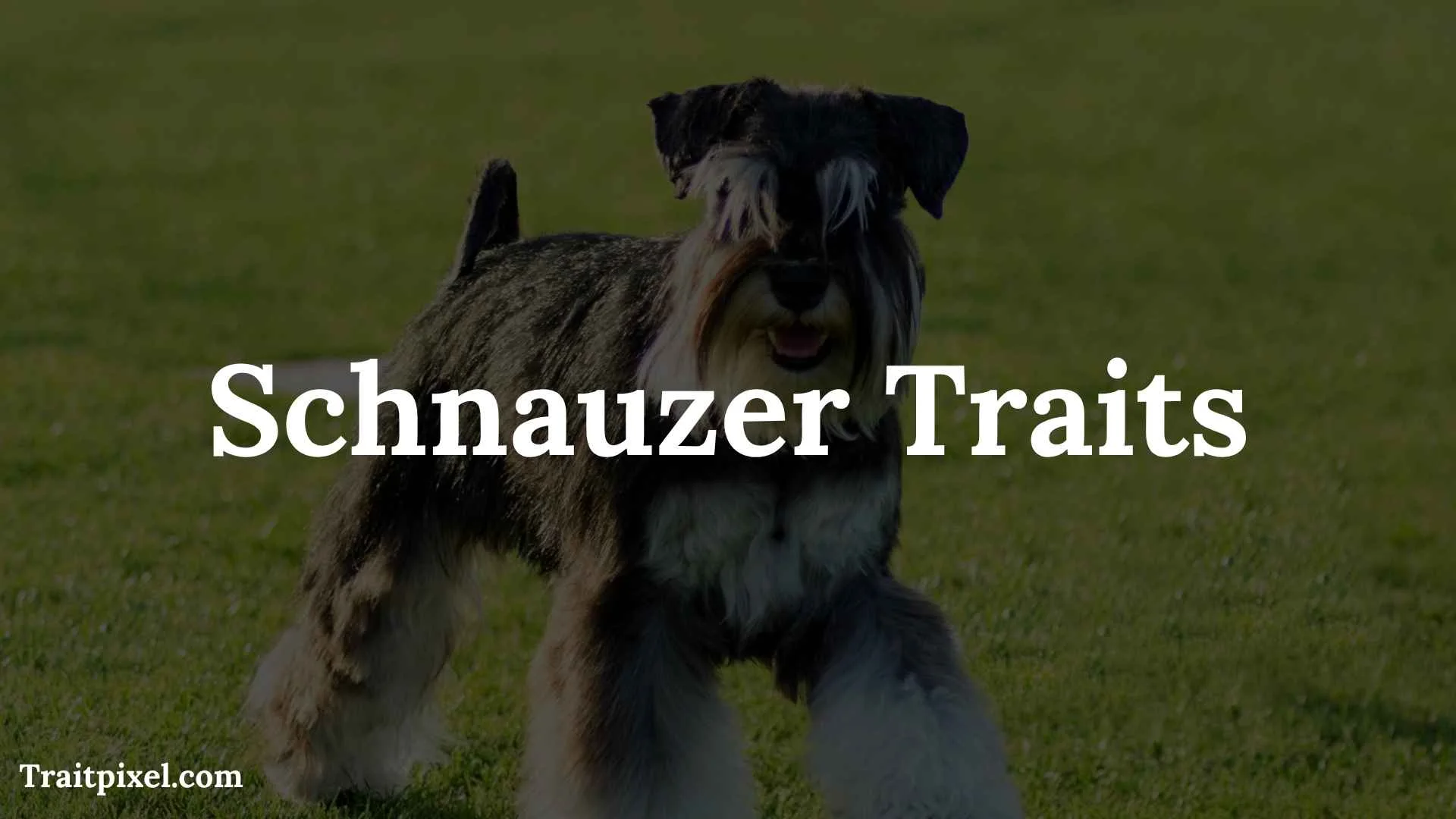
Schnauzer traits include intelligence, alertness, loyalty, confidence, energy, curiosity, and a strong tendency to stay involved with their family. However, “Schnauzer” can refer to three distinct breeds: the Miniature Schnauzer, Standard Schnauzer, and Giant Schnauzer. They share the famous beard, eyebrows, wiry coat, and working-dog heritage, but their personalities and exercise needs are not identical.
The most important thing to understand is that Schnauzers are generally thinking, active dogs rather than passive companions. They often enjoy training, games, exploration, and having a role in family life. Their alert nature can also make them vocal or cautious with unfamiliar people. The right training and early socialization can turn those instincts into useful, manageable behavior.
Quick Answer
What are the main Schnauzer traits?
Schnauzers are generally intelligent, alert, energetic, loyal, curious, trainable, confident, and family-oriented dogs. They were developed as working dogs, so many retain strong instincts to watch their surroundings, investigate unusual activity, and stay busy. Miniature Schnauzers tend to be lively and adaptable, Standard Schnauzers are particularly versatile and strong-willed, while Giant Schnauzers are larger, more powerful, protective, and demanding of experienced handling.
Individual temperament can vary according to genetics, socialization, training, environment, and life experiences.
Schnauzer Trait Overview
| Trait | Typical Schnauzer tendency | What it can look like at home |
| Intelligence | High | Learns commands and patterns quickly |
| Alertness | High | Notices visitors, sounds, and changes |
| Loyalty | High | Forms strong bonds with family |
| Energy | Moderate to high | Enjoys walks, games, training, and activity |
| Trainability | Generally good | Responds well to structured training |
| Curiosity | High | Investigates new objects and surroundings |
| Confidence | Moderate to high | Often approaches situations with purpose |
| Independence | Moderate | May think before following a command |
| Watchdog instinct | Strong | May bark when something seems unusual |
| Sociability | Individual | Can be friendly but may be reserved with strangers |
| Prey drive | Present | May chase small animals |
| Grooming needs | Moderate to high | Wiry coat requires regular maintenance |
| Mental stimulation | Important | Training and problem-solving help prevent boredom |
These are broad breed tendencies, not guarantees for every individual dog. The three recognized Schnauzer breeds have meaningful differences in temperament and working requirements.
What Are Schnauzer Traits?
Schnauzer traits are the physical, behavioral, and temperament characteristics commonly associated with Schnauzer breeds.
The name covers three separate breeds recognized by the American Kennel Club: Miniature Schnauzer, Standard Schnauzer, and Giant Schnauzer. They are not simply one breed available in three sizes. The AKC describes the three as distinct breeds, while the Fédération Cynologique Internationale places the Schnauzers within its Pinscher and Schnauzer group.
Their shared heritage helps explain several common characteristics:
- Strong awareness of their surroundings
- A willingness to work
- A distinctive wiry coat
- Prominent eyebrows and beard
- Intelligence and problem-solving ability
- Family loyalty
- Watchdog behavior
- Physical toughness
- Curiosity
- A need for meaningful activity
Understanding their working background is useful because some behaviors that seem troublesome can actually be normal breed instincts expressed in an unsuitable situation.
For example, a Schnauzer barking at someone approaching the house may be showing its watchdog instinct. The goal of training is not necessarily to eliminate awareness but to teach the dog when an alert is appropriate and when it should settle.
The Three Schnauzer Breeds Have Different Personalities
Although Miniature, Standard, and Giant Schnauzers share a family resemblance, their traits should not be treated as interchangeable.
| Breed | General temperament | Activity needs | Notable consideration |
| Miniature Schnauzer | Friendly, smart, lively, obedient | Moderate | Adaptable but can be vocal and vigilant |
| Standard Schnauzer | Energetic, intelligent, determined, protective | Moderate to high | Needs engagement and consistent training |
| Giant Schnauzer | Loyal, alert, powerful, trainable | High | Requires substantial exercise, socialization, and handling |
Miniature Schnauzer Traits
Miniature Schnauzers are the smallest of the three. The AKC describes them as obedient, friendly, and smart. They are generally adaptable and can live in different environments when their exercise, training, and companionship needs are met.
Common Miniature Schnauzer traits include:
- Lively
- Intelligent
- Affectionate with family
- Alert
- Curious
- Playful
- Trainable
- Adaptable
- Confident
- Watchful
Their small size should not be mistaken for low energy. They were developed as working farm dogs and ratters, and many retain an interest in investigating movement and chasing small creatures.
Standard Schnauzer Traits
The Standard Schnauzer is the original medium-sized Schnauzer from which the smaller Miniature Schnauzer and larger Giant Schnauzer developed. The AKC describes Standards as exuberant, amiable, vigilant, protective, determined, and strong-willed.
Typical Standard Schnauzer traits include:
- Intelligent
- Alert
- Energetic
- Protective
- Determined
- Confident
- Family-oriented
- Playful
- Independent-minded
- Highly engaged with activities
They often do best when they have something constructive to do. Obedience, agility, tracking, structured play, and other mentally demanding activities can give this type of dog an appropriate outlet.
Giant Schnauzer Traits
Giant Schnauzers are substantially larger and more powerful than the other two breeds. The AKC describes them as alert, loyal, and trainable, while also noting their protective and territorial instincts.
Typical Giant Schnauzer traits include:
- Strong loyalty
- High intelligence
- Alertness
- Protective behavior
- High energy
- Trainability
- Confidence
- Territorial tendencies
- Strong work drive
- Affection toward familiar people
Because a Giant Schnauzer combines size, strength, energy, and protective instincts, early training and socialization are especially important.
The Most Common Personality Traits of Schnauzers
1. Intelligent
Intelligence is one of the defining Schnauzer characteristics.
A Schnauzer may quickly learn that sitting earns a treat, that barking brings attention, or that a certain cupboard contains its food. This ability to identify patterns is useful during training but can also create unwanted habits if the dog’s behavior is accidentally rewarded.
Practical lesson: train the behavior you want before your dog invents its own solution.
Short, varied training sessions can work particularly well because repetition without engagement can become boring for a clever dog.
2. Alert
Schnauzers are naturally observant.
They may notice:
- Someone walking past the home
- A strange sound outside
- A new object in the yard
- Another animal nearby
- An unfamiliar visitor
- Changes in household routines
Alertness is valuable for a watchdog, but excessive barking can become frustrating.
A useful training sequence is:
Notice → Alert → Check with owner → Settle
Instead of expecting the dog never to react, teach it what should happen after the initial alert.
3. Loyal
Many Schnauzers develop strong bonds with their families.
Loyalty may appear as:
- Following family members from room to room
- Staying nearby during household activities
- Watching the front door
- Enjoying shared walks
- Participating in games
- Seeking attention from familiar people
Miniature Schnauzers, in particular, are described by the AKC as dogs that want to participate in family life.
4. Energetic
Schnauzers are not generally suited to a lifestyle in which the dog receives little physical or mental activity.
Exercise can include:
- Brisk walks
- Fetch
- Structured play
- Obedience practice
- Agility
- Scent games
- Puzzle activities
- Hiking, where appropriate
- Supervised exploration
The exact amount required depends heavily on the individual dog and variety.
A Giant Schnauzer, for example, generally needs considerably more physical and mental engagement than a Miniature Schnauzer.
5. Curious
A Schnauzer may investigate almost anything that changes its environment.
A new package on the floor, a visitor’s bag, an unfamiliar sound, or a moving animal can become interesting immediately.
Curiosity can be turned into a training advantage through:
- Search games
- Scent work
- New commands
- Puzzle feeders
- Hide-and-seek
- Novel walking routes
- Controlled exposure to new environments
6. Confident
Schnauzers often carry themselves with confidence.
Confidence does not mean that every Schnauzer will be fearless. A poorly socialized dog may become uncertain or reactive in unfamiliar situations. Proper exposure during puppyhood can help the dog learn that unfamiliar people, sounds, surfaces, and environments are not automatically threats.
7. Strong-Willed
This trait is particularly important for owners.
A clever dog may understand a command perfectly and still decide that another activity is more interesting.
Strong-willed behavior can look like:
“I heard you. I am just not convinced.”
Consistent rules are therefore more useful than harsh corrections. If a behavior is allowed one day and punished the next, the dog receives confusing information.
8. Protective
Protective behavior is especially noticeable in Standard and Giant Schnauzers.
A dog may position itself between its family and an unfamiliar person, bark at approaching visitors, or become more watchful around the home. Giant Schnauzers are particularly associated with territorial and protective instincts.
Protection should be managed through training rather than encouraged indiscriminately.
9. Playful
Schnauzers can retain a playful attitude well beyond puppyhood.
Play is useful for more than entertainment. It can become a training tool that helps reinforce:
- Recall
- Impulse control
- Drop-it
- Wait
- Focus
- Loose-leash walking
10. Independent
A Schnauzer’s intelligence can come with independence.
The dog may examine a situation before responding instead of immediately reacting to every instruction. This is one reason reward-based training, consistency, and clear communication are useful.
Schnauzer Traits: Positive and Challenging Characteristics
No breed is defined entirely by positive or negative qualities. A trait can be helpful in one environment and difficult in another.
| Trait | Advantage | Possible challenge |
| Alertness | Good awareness of surroundings | Excessive barking |
| Intelligence | Learns quickly | Can learn bad habits quickly |
| Loyalty | Strong family bond | May become overly dependent on routine |
| Confidence | Handles many situations well | Can become pushy without boundaries |
| Energy | Great activity companion | Needs daily outlets |
| Curiosity | Enjoys learning | May investigate things you would rather leave alone |
| Protective instinct | Useful watchdog behavior | Can become territorial |
| Prey drive | Useful in some working activities | May chase small animals |
| Independence | Can work without constant guidance | May resist repetitive training |
| Playfulness | Excellent for engagement | Can become disruptive without structure |
The practical lesson is simple: good management turns natural traits into useful behavior.
Schnauzer Temperament With Family
Schnauzers can form close relationships with family members and often enjoy being included in daily activities.
A family-oriented Schnauzer may enjoy:
- Morning walks
- Playing in the yard
- Training games
- Relaxing near its owners
- Accompanying the family on appropriate outings
- Participating in household routines
Miniature Schnauzers are often particularly adaptable to family environments. The AKC notes that they can fit into settings ranging from apartments to farms when their needs are met.
Still, breed tendencies never replace individual assessment. Children should be taught respectful dog handling, and interactions between dogs and young children should be supervised.
Are Schnauzers Good With Children?
They can be good family companions, but the answer depends on the individual dog, the child’s behavior, supervision, and training.
Miniature Schnauzers are commonly kept as family dogs and are described by the AKC as generally good family companions. Standard Schnauzers can also be affectionate and protective family members. Giant Schnauzers require more careful management because their size, strength, energy, and protective instincts create different handling requirements.
Teach children to:
- Avoid pulling the beard or tail
- Leave the dog alone while eating
- Avoid climbing on the dog
- Respect sleeping areas
- Avoid taking toys from the dog’s mouth
- Allow the dog to move away when it wants space
A friendly dog still deserves boundaries.
Schnauzer Traits Around Strangers
Schnauzers can vary considerably around unfamiliar people.
Some greet visitors enthusiastically. Others observe first and warm up later. Their watchdog heritage can make them particularly attentive when strangers approach the home. Miniature Schnauzers, for example, are described as vigilant watchdogs and may take repeated positive interactions to trust unfamiliar people.
A useful goal is not “make my dog love everyone.”
A better goal is:
“My dog can notice a stranger without feeling that it must control the situation.”
Reward calm behavior around visitors and teach a reliable place, sit, stay, or settle command.
Schnauzer Traits Around Other Dogs
Compatibility with other dogs depends on the individual.
Factors include:
- Early socialization
- Previous experiences
- Age
- Sex
- Temperament
- Training
- Environment
- Resource guarding
- Individual preferences
Miniature Schnauzers can live successfully with other dogs, although the AKC notes that not every individual will want to be friends with every dog.
Slow introductions are generally better than forcing two unfamiliar dogs together.
Schnauzers and Small Animals
Schnauzers have historical connections to farm work and vermin control, so chasing small moving animals can be part of their behavioral repertoire.
A Schnauzer may show interest in:
- Mice
- Rats
- Squirrels
- Rabbits
- Birds
- Other fast-moving small animals
This does not mean every Schnauzer will chase everything. Training and individual temperament matter.
If a dog has strong chase behavior, reliable recall and controlled management are especially important.
Schnauzer Trainability
Schnauzers are generally capable learners, but intelligence does not mean automatic obedience.
Effective training should be:
- Consistent — everyone in the household uses the same rules.
- Reward-based — reinforce desirable behavior.
- Short and engaging — avoid endless repetition.
- Progressive — increase distractions gradually.
- Practical — teach behaviors useful in real situations.
- Early — establish good habits before unwanted behavior becomes routine.
Miniature Schnauzers are described by the AKC as intelligent and trainable and can excel in activities such as obedience, agility, Rally, Barn Hunt, and Earthdog.
Standard Schnauzers can also benefit from obedience and problem-solving activities, while Giant Schnauzers can excel in demanding dog sports and working activities.
Why Schnauzers Need Mental Stimulation
Physical exercise alone may not satisfy a highly engaged dog.
Imagine giving a Schnauzer a long walk but never allowing it to sniff, learn, solve problems, or interact meaningfully. The dog may still have unused mental energy.
Try combining:
Physical activity + training + exploration + rest
For example:
- 30-minute walk
- Five minutes of obedience practice
- Scent-search game
- Quiet rest
The exact routine should be adjusted for the dog’s age, health, breed, and individual energy level.
Grooming Traits and the Famous Schnauzer Beard
The Schnauzer’s physical appearance is one of its most recognizable characteristics.
Common features include:
- Wiry coat
- Distinctive eyebrows
- Pronounced beard
- Strong, square-looking body
- Alert expression
Miniature Schnauzers have a hard, wiry coat and shed very little, but low shedding does not mean no grooming. Regular coat maintenance is still necessary.
Giant Schnauzers also need regular brushing and coat maintenance.
The beard deserves special attention because food and water can remain around the facial hair. Wiping the beard after meals or drinking can make daily care easier.
Schnauzer Size and Physical Differences
The three breeds differ substantially in size.
| Breed | Typical AKC height/weight information |
| Miniature Schnauzer | 12–14 inches; 11–20 pounds |
| Standard Schnauzer | About 17.5–19.5 inches; 35–45 pounds |
| Giant Schnauzer | About 23.5–27.5 inches; 55–95 pounds depending on sex |
AKC breed information provides these ranges for Miniature and Giant Schnauzers, while its Standard Schnauzer guidance gives approximately 17.5–19.5 inches and 35–45 pounds.
These differences matter because size affects exercise, handling, transportation, living space, training demands, and the physical consequences of unwanted behavior.
Schnauzer Traits vs. Other Similar Dog Traits
Schnauzer vs. Terrier-Type Traits
The Miniature Schnauzer belongs to the AKC Terrier Group, while Standard and Giant Schnauzers are in the Working Group.
The Miniature therefore combines the recognizable Schnauzer temperament with traits associated with a small working terrier, including curiosity and interest in chasing vermin.
Alertness vs. Aggression
These traits are not the same.
| Alertness | Aggression |
| Notices something unusual | Attempts to threaten or harm |
| May bark | May escalate beyond warning |
| Can settle with training | Requires more careful behavioral management |
| Often useful for watchdog work | Can become a serious behavior concern |
A Schnauzer barking at the door is not automatically an aggressive dog.
Loyalty vs. Separation Problems
A dog can be strongly attached to its family without having separation-related behavioral problems.
Loyalty means the dog values its relationship with familiar people.
Separation-related problems involve distress or unwanted behavior associated with being alone. These should be assessed based on the actual behavior rather than assumed from the breed.
15 Real-Life Examples of Schnauzer Traits
1. The Doorbell Example
A Schnauzer hears the doorbell and immediately runs to the entrance.
Trait shown: alertness.
2. The Training Example
The dog learns “sit” after several short sessions and starts sitting automatically when treats appear.
Trait shown: learning ability.
3. The Garden Example
A Miniature Schnauzer notices movement under a bush and investigates immediately.
Trait shown: curiosity and working instinct.
4. The Family Walk
The dog happily follows several family members during an outdoor walk.
Trait shown: family orientation.
5. The Visitor Example
A Standard Schnauzer watches a stranger carefully before relaxing after a proper introduction.
Trait shown: vigilance and social caution.
6. The Puzzle Example
A dog works out how to move a toy to release a treat.
Trait shown: problem-solving.
7. The Hiking Example
A Giant Schnauzer remains engaged during a long, appropriately managed outdoor activity.
Trait shown: physical stamina and working drive.
8. The Training Challenge
The dog knows “down” but ignores it because something more interesting is happening outside.
Trait shown: independence and environmental interest.
9. The Family Routine
The dog follows its owner while gardening, then settles nearby.
Trait shown: desire to participate in family activities.
10. The Barking Habit
The dog barks at every person passing the window.
Trait shown: alertness that needs better management.
11. The New Toy
The dog carefully examines an unfamiliar toy before playing with it.
Trait shown: curiosity.
12. The Small-Animal Chase
A squirrel runs across the yard and the dog immediately gives chase.
Trait shown: prey/chase instinct.
13. The Obedience Game
The owner alternates between “sit,” “down,” “stay,” and recall rather than repeating one command for several minutes.
Trait encouraged: mental engagement.
14. The Grooming Example
The dog learns to remain still while its beard is cleaned.
Trait developed: cooperation through training.
15. The Calm-Visitor Example
Instead of rushing toward a guest, the dog watches from its bed and receives a reward for remaining calm.
Trait reinforced: impulse control.
How to Tell Which Schnauzer Fits Your Lifestyle
Use this simple decision guide:
Do you want a smaller dog that can adapt to many homes?
→ Consider the Miniature Schnauzer, while still planning for exercise, grooming, training, and mental stimulation.
Do you want a medium-sized, energetic working companion?
→ The Standard Schnauzer may fit a household prepared for training and activity.
Do you want a large, powerful working and guardian-type dog?
→ The Giant Schnauzer requires serious consideration of exercise, socialization, training, size, and handling.
Do you want a dog that needs very little interaction or stimulation?
→ Schnauzers generally deserve a closer look before being chosen for that lifestyle. Their working heritage and active minds make engagement important.
Common Mistakes When Interpreting Schnauzer Behavior
Mistake 1: Assuming Every Schnauzer Has the Same Personality
The three Schnauzer breeds are distinct, and individual dogs vary even within the same breed.
Mistake 2: Treating Barking as Automatically Bad
Barking can be a natural alert behavior. The useful training goal is appropriate control.
Mistake 3: Confusing Intelligence With Easy Training
A smart dog can learn quickly, but it can also learn undesirable behaviors quickly.
Mistake 4: Choosing a Giant Schnauzer Only for Appearance
The Giant’s size and beard are striking, but its exercise, training, socialization, and management requirements deserve equal attention.
Mistake 5: Assuming a Small Dog Needs Little Exercise
Miniature Schnauzers are small, but they were developed as working dogs and remain active and inquisitive.
Mistake 6: Ignoring Socialization
A naturally watchful dog benefits from learning how to respond calmly to unfamiliar people, animals, sounds, and environments.
Mistake 7: Using Harsh Training
A strong-willed, intelligent dog benefits from clarity and consistency. Harsh or confusing interactions can damage trust and may make behavior harder to manage.
Common Misconceptions About Schnauzer Traits
| Myth | Fact |
| All Schnauzers have identical personalities | The three breeds differ, and individual dogs differ too |
| Small means low-energy | Miniature Schnauzers can be lively and athletic |
| Low shedding means no grooming | Their coats still require regular maintenance |
| Alert means aggressive | Awareness and aggression are different behaviors |
| Intelligent means effortless training | Smart dogs still require consistent teaching |
| A beard is purely cosmetic | It is part of the breed’s distinctive physical appearance and needs practical grooming |
| Giant Schnauzers are simply oversized Miniatures | The three are distinct breeds with different breed standards and roles |
| Every Schnauzer loves every dog | Social preferences vary by individual |
| Barking can never be controlled | Training can teach dogs appropriate responses and settling behavior |
Related Schnauzer Traits to Understand
Watchdog Traits
Alertness and vigilance are important parts of the Schnauzer profile, particularly for dogs that retain strong guarding instincts.
Working-Dog Traits
Their history helps explain why many Schnauzers enjoy tasks, structured activity, and problem-solving.
Terrier Traits
Miniature Schnauzers belong to the Terrier Group and retain characteristics associated with their history as farm dogs and ratters.
Protective Traits
Protectiveness can be useful when appropriately controlled but needs careful socialization, particularly in a large, powerful Giant Schnauzer.
Companion-Dog Traits
Despite their working backgrounds, Schnauzers can become deeply involved family companions and often enjoy simply being part of household activities.
Schnauzer Traits and Early Socialization
Early socialization is especially useful for a breed with a naturally alert temperament.
A puppy can gradually experience:
- Different people
- Calm dogs
- Household sounds
- Cars
- Veterinary handling
- Grooming
- Different floor surfaces
- New environments
- Visitors
- Appropriate public settings
The objective is not to overwhelm the puppy with constant stimulation. It is to provide controlled, positive experiences that teach the puppy how to handle normal changes.
For Giant Schnauzers, the importance of early socialization is especially emphasized because of their protective and territorial tendencies.
A Practical Daily Framework for a Schnauzer
A balanced routine can include:
Morning:
Walk + sniffing + basic obedience
Midday:
Rest + independent enrichment
Afternoon:
Play or a short training session
Evening:
Family interaction + calm activity
Throughout the day:
Opportunities for appropriate chewing, exploration, and rest
This is a framework rather than a fixed prescription. Puppies, adults, alternative, and dogs with individual health or behavioral needs require different routines.
Key Takeaways
- Schnauzers are generally intelligent, alert, loyal, energetic, and curious.
- There are three distinct Schnauzer breeds: Miniature, Standard, and Giant.
- Miniature Schnauzers are small, adaptable, lively, and generally family-oriented.
- Standard Schnauzers are energetic, determined, intelligent, vigilant, and versatile.
- Giant Schnauzers are powerful, loyal, highly trainable, energetic, and protective.
- Alertness should not automatically be interpreted as aggression.
- Intelligence makes training rewarding but requires consistency.
- Mental stimulation is important because these dogs were developed for purposeful work.
- Socialization helps channel watchfulness into appropriate behavior.
- Their wiry coats require regular grooming despite relatively low shedding in some varieties.
- The best Schnauzer for a household depends on size, activity level, experience, training commitment, and desired temperament.
Frequently Asked Questions
Are Schnauzers good family dogs?
They can be excellent family companions when their exercise, training, socialization, grooming, and interaction needs are met. Miniature Schnauzers are particularly adaptable family dogs, while Standards and Giants may require greater experience and activity.
Are Schnauzers intelligent?
Yes. Schnauzers are generally regarded as intelligent and capable working dogs. Miniature Schnauzers, for example, can learn obedience and participate successfully in activities such as agility, Rally, Barn Hunt, and Earthdog.
Are Schnauzers aggressive?
A Schnauzer should not be labeled aggressive simply because it is alert or protective. Individual behavior varies. Protective or territorial tendencies can occur, especially in Giant Schnauzers, which is why early socialization and training matter.
Do Schnauzers bark a lot?
They can be vocal because alerting is part of their behavioral profile. The amount of barking varies by individual dog, environment, training, and stimulation. Teaching a reliable “quiet” or settling behavior can help manage unnecessary barking.
Are Schnauzers easy to train?
They are generally trainable, but their intelligence and independent streak mean that training should remain engaging and consistent. Short sessions with clear rewards can be more effective than repetitive drills.
Do Schnauzers get along with other dogs?
Some do very well with other dogs, while others are more selective. Early socialization, careful introductions, individual temperament, and previous experiences all matter.
Are Miniature Schnauzers high-energy?
They can be lively and athletic, although their needs are generally more manageable than those of a Giant Schnauzer. The AKC notes that Miniature Schnauzers can be satisfied with daily physical activity combined with play or training.
Are Giant Schnauzers good for first-time owners?
They can be challenging for inexperienced owners because they combine substantial size and strength with high energy and protective or territorial instincts. The AKC specifically notes that they are not generally recommended for first-time owners.
Do Schnauzers shed?
Schnauzers are known for relatively low shedding compared with many breeds, but low shedding does not eliminate grooming. Their wiry coats need regular maintenance.
What were Schnauzers originally bred for?
Their history is closely connected with German farm work, guarding, driving livestock, and controlling vermin. The Miniature Schnauzer was developed from the Standard Schnauzer and became particularly useful for vermin control.
What is the difference between Miniature, Standard, and Giant Schnauzers?
They are three distinct breeds rather than one breed in three sizes. They share physical characteristics and ancestry but differ in size, breed-group classification, working history, temperament, and management requirements.
Do Schnauzers need mental stimulation?
Yes. Their intelligence and working heritage make mental engagement valuable. Training, scent games, puzzle activities, and dog sports can provide useful outlets alongside physical exercise.
Conclusion
The most important Schnauzer traits are intelligence, alertness, loyalty, curiosity, energy, confidence, and a willingness to engage with their people. Those characteristics can make Schnauzers highly rewarding companions, but they also mean that these dogs generally need more than food, shelter, and occasional walks.
Miniature, Standard, and Giant Schnauzers should be evaluated separately because their size and working characteristics create different ownership demands. The Miniature can be an adaptable and lively companion, the Standard offers an energetic and versatile working temperament, and the Giant combines intelligence and loyalty with considerable strength, energy, and protective instinct.
A well-trained Schnauzer is not simply a dog that obeys commands. It is a dog that learns how to use its natural traits appropriately: alert without overreacting, explore without causing trouble, protect without becoming uncontrolled, and stay active without becoming destructive.

I’m Callum Westbrook, a British writer passionate about exploring the traits that make every individual distinctive. I examine personality, temperament, emotional qualities, and behavioural patterns, connecting them with everyday experiences. Through straightforward explanations and thoughtful insights, I hope to help readers recognise different characteristics and develop a deeper appreciation of human individuality.
Books:
- The Nature of Human Traits
- Personality, Temperament and Character